Originally published June 2025 on East Asia Forum Quarterly
NETINA TAN AND AIDEN MCILVANEY
PICTURE: REUTERS / DADO RUVIC / ILLUSTRATION
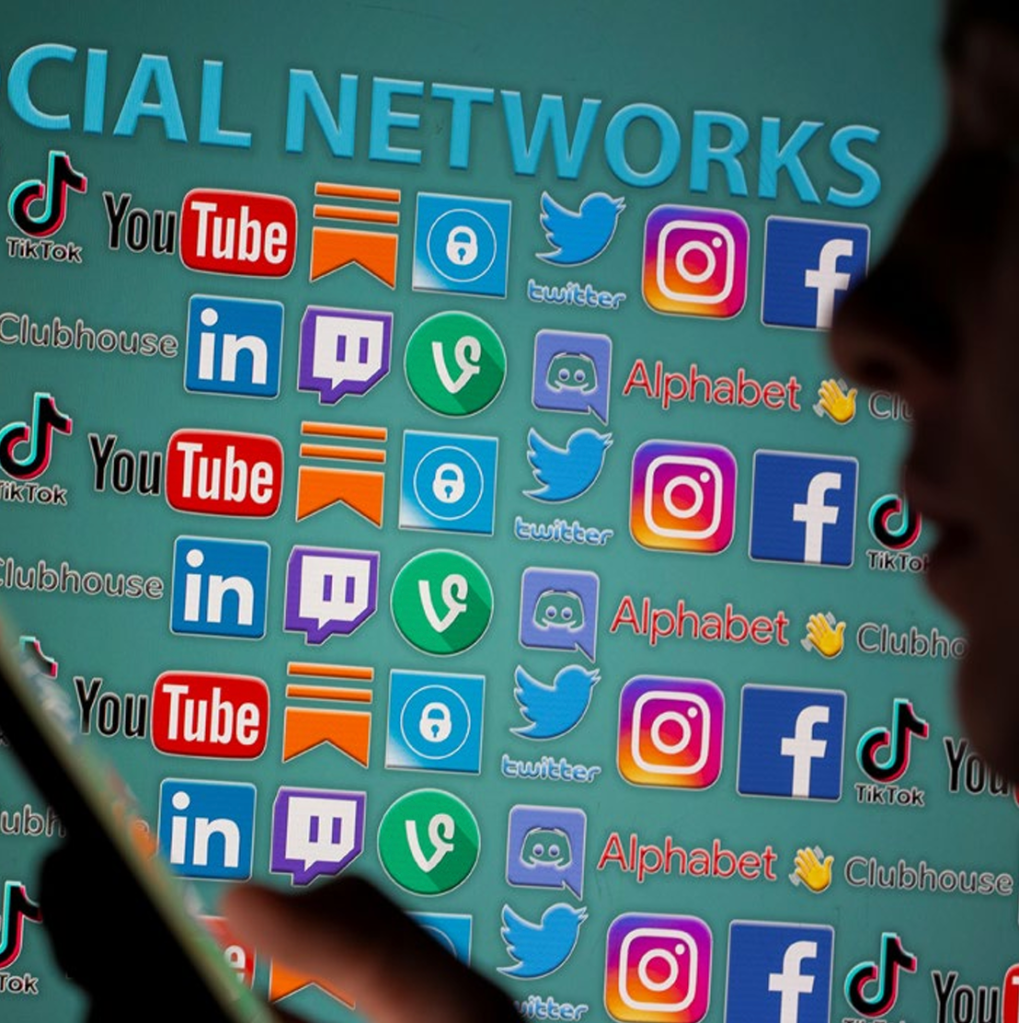
A woman looking at a smartphone is pictured in front of a display social media logos.
As UP to 64.3 percent of Southeast Asians actively use social media, both small and large political parties are increasingly turning to online platforms to raise their public profiles and garner votes. But campaigning on social media has also opened a pandora’s box of problems that threaten regional electoral integrity. The risks can be best mitigated through a multistakeholder approach.
Candidates, political parties, and voters have benefited from enhanced political communication and citizen-led campaigning through social media engagement in Southeast Asia. But online disinformation—intentionally disseminating false information— plays an increasingly greater role in elections.
Disinformation is difficult to fact-check in short campaigns, enabling malicious state and non-state actors to influence elections and public opinion. Freedom House found electoral disruption in 24 countries in 2020. In 2019, the Oxford Internet Institute reported state-sponsored online harassment of activists and opposition members in 47 out of 70 countries surveyed, including the use of unlawfully gathered personal data. As the Cambridge Analytica data scandal showed, improperly obtained personal data can be used for micro-targeting, which is exacerbated by artificial bot campaigns.
Continue reading



 Netina Tan